10L DEF Drums
$34.00 per drum, inc. GST
Cars, utes, light commercial and workshop top-ups
View 10L drums →Three names, one fluid. Here's what each of them actually means — and how to buy it in Sydney without paying for the confusion.
If you've been quoted for "DEF" by one supplier and "AdBlue" by another and assumed they were different products, they weren't. All three names describe a 32.5% high-purity urea solution in demineralised water, manufactured to the ISO 22241 standard, used in diesel engines fitted with Selective Catalytic Reduction.
The reason there are three names is history rather than chemistry.
| Diesel exhaust fluid (DEF) | The generic, descriptive name — what the fluid does. Common in North America and in fleet-maintenance language, and increasingly used here. |
|---|---|
| AdBlue® | A trademark, registered by the German Association of the Automotive Industry (VDA). A producer licensed to use the name has been audited against the standard, which is why it carries weight on a quote. |
| AUS 32 | Aqueous Urea Solution 32.5% — the technical designation in ISO 22241. The name you'll see on a spec sheet or safety data sheet. |
| ISO 22241 | The standard itself. It sets the concentration and the purity limits, and it's the thing that actually protects your SCR catalyst. |
The practical takeaway for a buyer: ignore the name and check the standard. Anything sold as DEF, AdBlue or AUS 32 should be ISO 22241 compliant. If a supplier can't tell you that, or can't produce a certificate of analysis for the batch, the price difference isn't a saving — an SCR catalyst is one of the more expensive things on a modern truck.
Our AdBlue is Australian-made, VDA-certified and manufactured to ISO 22241, so it satisfies every one of those names on a purchase order.
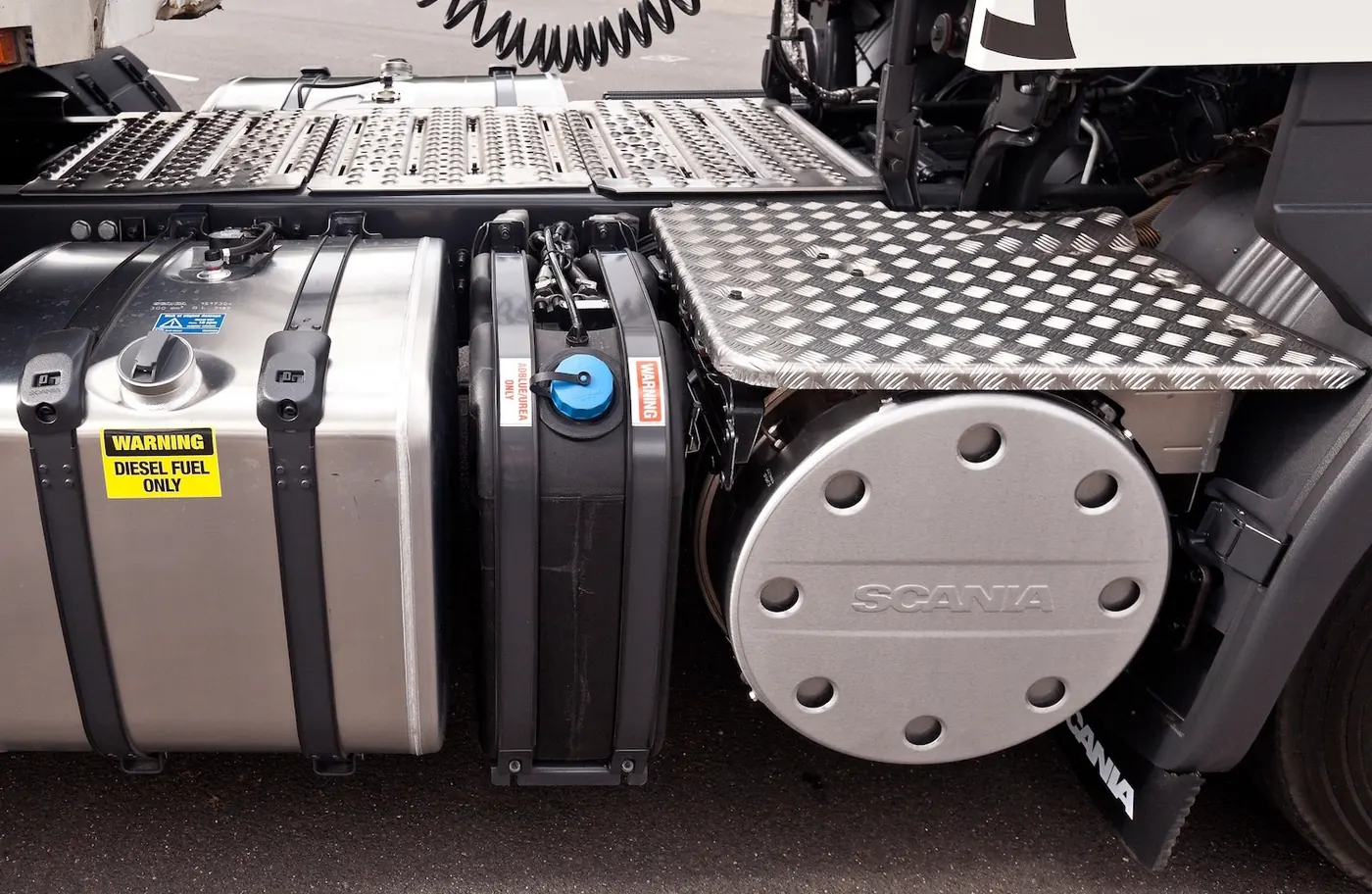
The DEF tank sits separately from the diesel tank, and always takes a blue cap.
DEF is not a fuel additive and never touches the diesel. It sits in its own tank — the blue filler cap — and is injected as a fine mist into the hot exhaust ahead of the SCR catalyst. The heat breaks the urea down into ammonia, and across the catalyst that ammonia reacts with nitrogen oxides to produce plain nitrogen and water vapour.
That's why consumption tracks fuel burn so closely: the harder the engine works, the more NOx it produces, and the more fluid the system doses to match. Roughly 5% of your diesel usage is the working figure — our AdBlue calculator turns your diesel litres or kilometres into a real number.
A fuller walk-through of the chemistry, consumption rates by vehicle type, storage and shelf life is on the AdBlue guide.
One warning worth repeating: never put DEF in the diesel tank, and never top the DEF tank up with water. The water in DEF is demineralised for a reason — the minerals in tap water poison the catalyst.
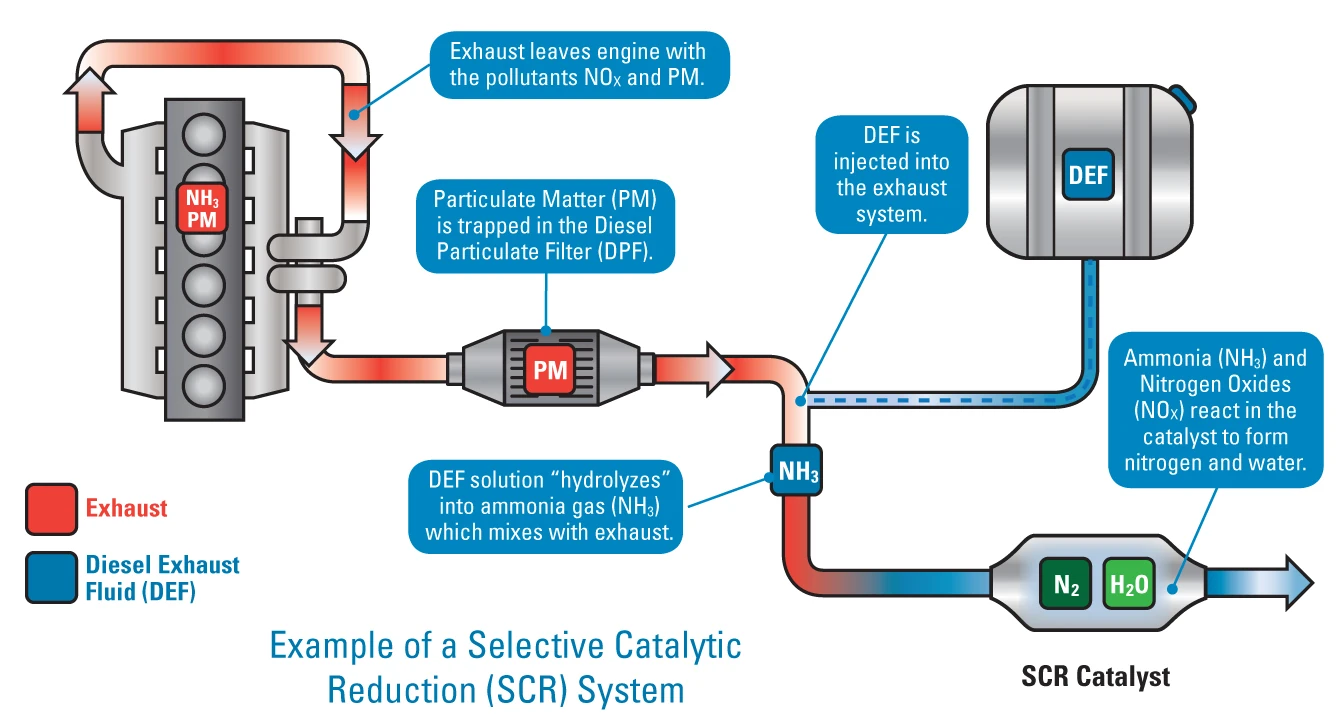
DEF is injected downstream of the engine — it never mixes with the diesel.
Same certified fluid in every format — pick the one that suits how much you get through.
$34.00 per drum, inc. GST
Cars, utes, light commercial and workshop top-ups
View 10L drums →$1,067.00 per IBC, inc. GST
Fleets, depots and workshops — pump kits available
View 1000L IBC →Custom quote
From 3,000L, tanker-delivered into your own tank
View bulk supply →Ordering regularly? A trade account gets you tiered per-litre pricing and invoice terms. Delivering across Sydney and Australia-wide.